
1.1 Billion Rejections: The Job Search System Is So Broken
Federal courts are litigating 1.1 billion AI-rejected job applications, ghost jobs fill 1 in 4 listings, and ATS scoring is essentially random.
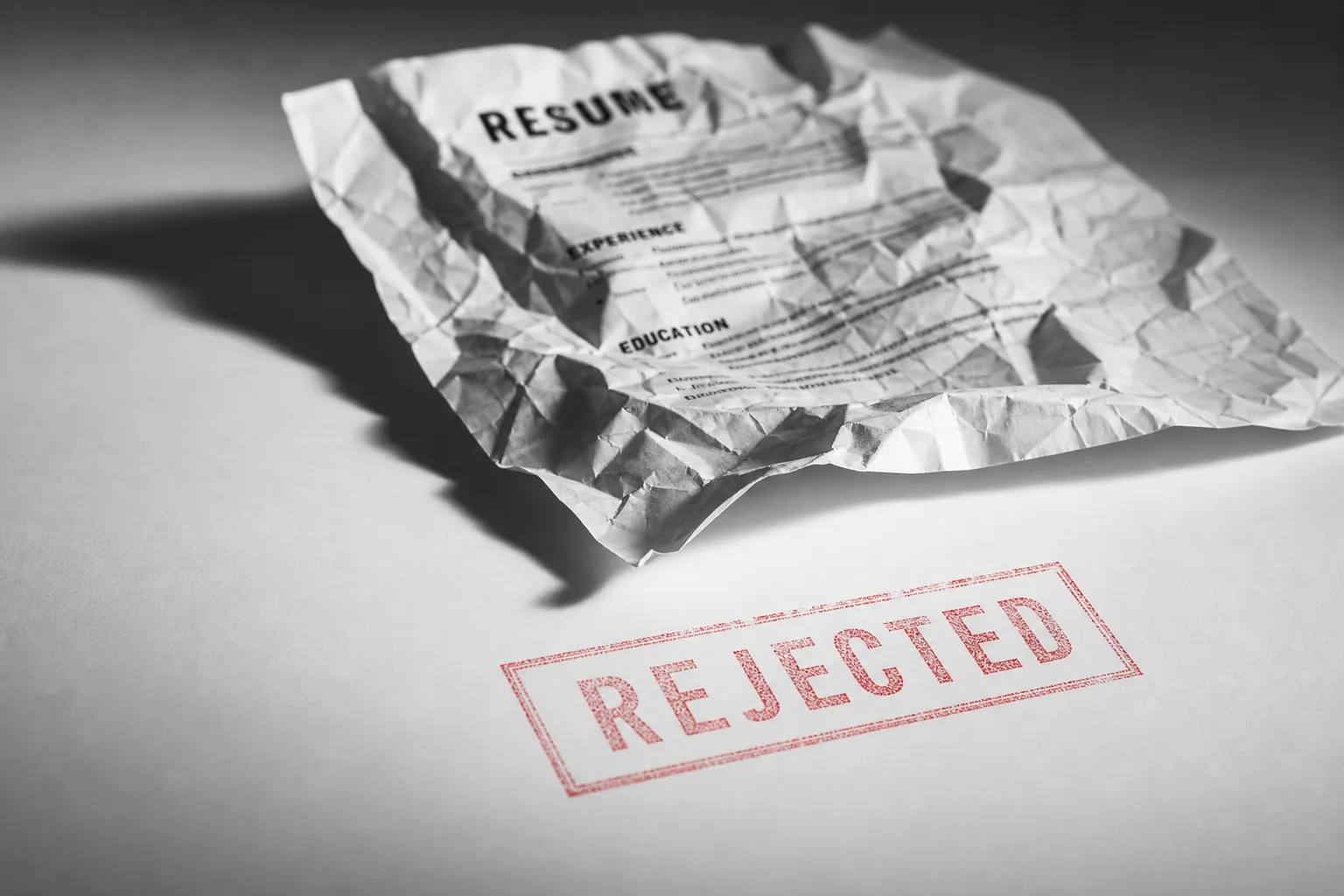
The same resume. The same candidate. Four different ATS scores in the same week: 90, 74, 88, 83.
If an employer sets its cutoff at 85, that candidate passes twice and fails twice. Same person. Same resume. Random outcome.
A writer ran this experiment after HackerRank open-sourced its ATS scoring system. Their conclusion: it’s “essentially a vibe-check. Something HR teams and hiring initiatives have spent decades trying to avoid.” HackerRank’s ATS is detectable on 97.8% of Fortune 500 career sites.
You’re not losing to a better candidate. You’re losing to a coin flip.
And that’s before we get to the part where 1.1 billion applications have been rejected by AI that’s currently being argued in federal court.
The Workday Case
Mobley v. Workday. Case 3:23-cv-00770, N.D. Cal.
The number disclosed in Workday’s own court filings: 1.1 billion applications screened by their AI system. The argument is that the AI discriminated on race, age, and disability, systematically, at scale, across every employer running Workday’s platform.
In May 2025, a federal judge conditionally certified the ADEA collective for applicants 40 and older.
The lead plaintiff received rejection emails within an hour of applying. Some rejections landed outside business hours. No human reviewed those applications.
This isn’t a small-scale glitch. It’s an infrastructure-level problem. Workday’s hiring AI runs across thousands of employers. When the system has bias baked in, every candidate who applies through any Workday-powered portal gets filtered through it.
If you’ve ever applied to a position you were objectively qualified for and got rejected instantly, you now have a federal case number to attach to that experience.
This Isn’t Just Workday
In 2023, the EEOC settled its first AI hiring discrimination case. EEOC v. iTutorGroup. The software had been auto-rejecting female applicants 55 and older and male applicants 60 and older. Researchers caught it by submitting two identical applications with different birth dates.
Different birth date. Different outcome. $365,000 settlement.
In 2025, Eightfold AI faced lawsuits arguing its scoring functions like a consumer report under the FCRA, which would trigger disclosure requirements that currently don’t exist in most hiring pipelines. HireVue and Intuit drew EEOC complaints in March 2025 showing their AI tools performed worse for deaf and non-white applicants. The FTC stood up a Joint Labor Task Force in February 2025 specifically to address deceptive practices in hiring.
The pattern is consistent. AI hired to screen candidates is consistently screening out protected classes at scale, and regulators are starting to catch up.
The Ghost Job Layer
Here’s what compounds all of it.
One in three employers admits to posting jobs with no intention to hire, according to Clarify Capital. Forty-five percent of HR professionals post ghost jobs “regularly.” The Wall Street Journal put the share of active listings that are actually ghost jobs at 18-22% in April 2025. LinkedIn’s own data, via ResumeUp.AI analysis, puts it at 27.4%.
Thirty-six percent of job seekers applied to a role in the past year that was never filled, per Greenhouse 2025 data.
You’re competing in an ATS lottery, getting screened by potentially discriminatory AI, for a job that might not exist.
Revelio Labs tracked this longitudinally: hires per posting halved from 2019 to 2024. You’re not imagining that the market got harder. The data confirms it.
New York State responded by passing legislation. Bill S8877 cleared both chambers. It requires employers with 100 or more employees to disclose whether a posting is a real vacancy or a pipeline play, with penalties starting at $2,500 per post.
The fact that a state had to legislate basic honesty in job postings tells you everything about how normalized ghost jobs have become.
What This Actually Means
None of this is your fault.
The research, the lawsuits, the legislation — they all point to the same thing. The application system as it currently operates is not a reliable signal of your candidacy. It’s a filter with documented bias, randomized scoring, and a meaningful share of listings that were never real opportunities to begin with.
You’re not getting rejected because you’re underqualified. You’re getting filtered by a system that’s currently being litigated in federal court.
That distinction matters because it changes what the right response looks like.
The candidates getting traction right now aren’t the ones sending more applications into this machinery. They’re the ones who stopped treating the ATS as the primary path and started building a strategy around what the system can’t filter.
Post 4 covers the three mindset shifts that change the math for mid-career professionals. They’re not hacks. They’re a different way to read the game.
The short version: volume isn’t the answer when the system itself is the problem.
Keep reading
More from the RoleNavigator blog