
More Applications Don't Help. They Hurt.
Focused searchers convert 1 in 12 applications to an interview. Mass-appliers convert 1 in 42. Volume isn't neutral. It actively lowers your odds.
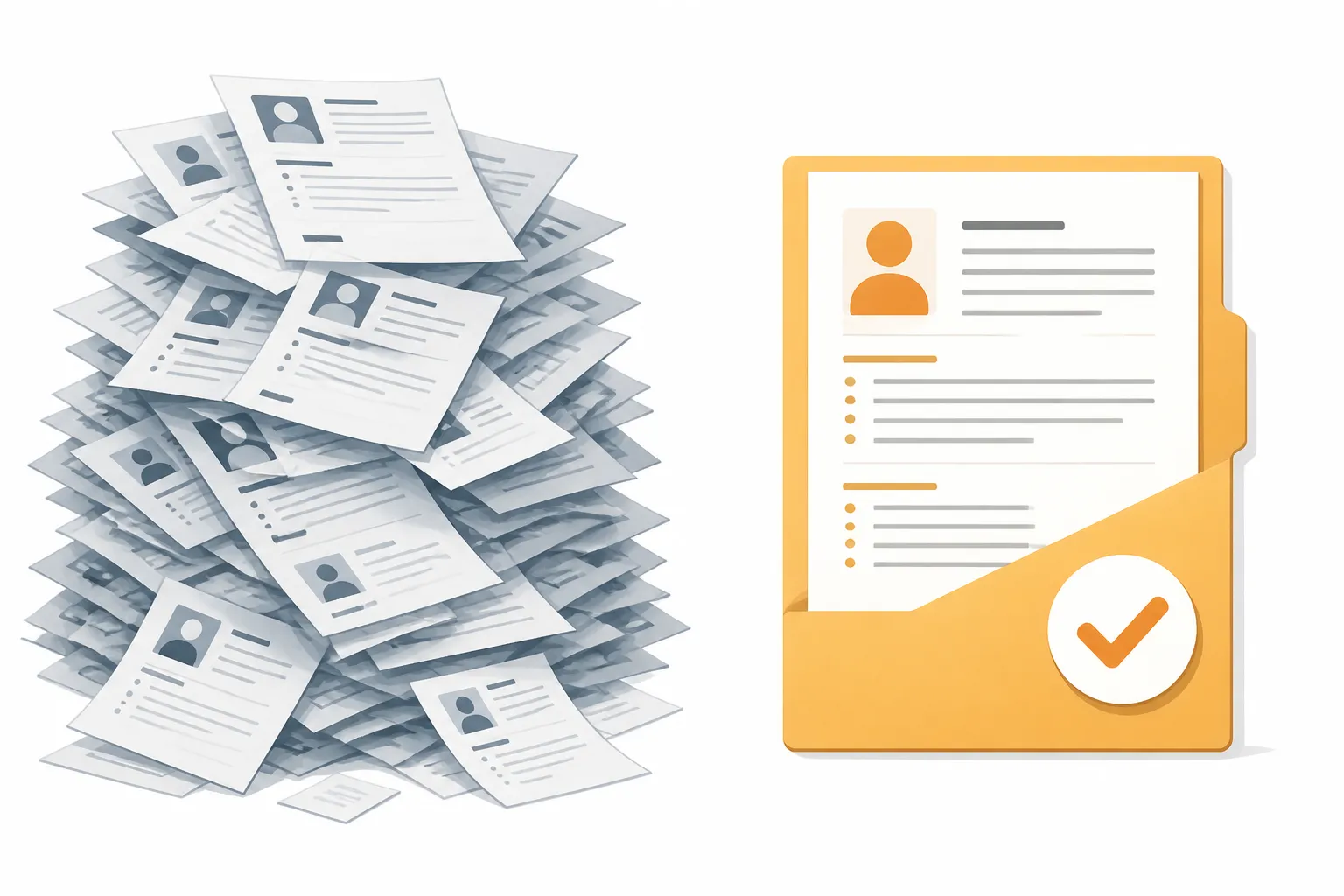
A Forbes survey of 1,000 US job seekers published this week puts a specific number on the volume problem: focused job seekers convert 1 application in 12 to an interview, while mass-appliers convert 1 in 42. That’s a 3.5x gap in per-application return. The average across all strategies sits at 1 in 13, dragged down by the mass-applying majority.
Volume doesn’t just fail to help. It actively lowers your odds.
Who’s doing it and why
48% of US job seekers describe their approach as spray-and-pray, applying broadly and quickly rather than narrowing in. That’s roughly half the audience running the strategy that cuts return by 3.5x.
This logic isn’t irrational. Experienced professionals cast wide nets partly as a hedge against overqualification screening: apply to enough roles and something will stick regardless of fit concerns. What the Pin analysis of 500,000+ applications shows is that this hedge doesn’t work. Experience calibration failures drive 28.8% of all merit-based rejections: 12.2% for too much experience, 16.6% for too little. Volume amplifies the problem. Applying broadly to roles where your seniority is a structural liability doesn’t reduce overqualification rejections. It generates more of them.
Customizing nothing is the same failure
Applying to everything and customizing nothing aren’t separate mistakes. When you’re applying to 42 roles, you’re not customizing 42 applications. You’re sending the same document or minor variations of it into roles where your resume may land at 48/100 on the ATS score and never reach a human.
Matched resumes convert at 5.75%, while generic ones convert at 2.68%, from an analysis of 59,000+ resumes. That’s a 115% improvement. The math on 20 customized applications versus 42 generic ones isn’t close: the 20 produce more interviews.
The search duration is extending
Huntr’s Q3 2026 report tracked 84,753 applications and found the median time to first offer is now 102 days, up from 78 days a year ago. That’s a 31% increase. When a search runs three-plus months, applying to poor-fit roles early compounds the problem. Each wasted application burns time. The list of real targets doesn’t shrink.
HN “Who is Hiring?” postings are stuck near 12-year lows in November 2026. Fewer open roles means more competition per listing and tighter fit requirements. Poor targeting in a thin market costs more than it did during the posting surge of 2021, when volume candidates occasionally landed on a role that happened to be a decent fit despite the mismatch. There is less room for near-misses.
The targeting problem nobody solved
Evidence for targeting is unambiguous. The practical barrier is equally clear: how do you know which applications are worth real effort before you’ve sent them and waited three weeks for silence?
Boards show everything. They can’t tell you where you’re competitive before you apply. Without that signal, most people default to volume as a hedge against not knowing. It’s a rational response to incomplete information. It just produces the 1 in 42 rate.
RoleNavigator scores every listing against your actual resume before you apply, with a plain explanation of why it matched and where it didn’t, including seniority fit. The listings where your profile is structurally a liability drop out before you commit an application to them. What stays is the list you’re actually competitive for.
Sending 20 focused applications instead of 42 generic ones is better math. Knowing which 20 those are, before the application goes out, is the step most job searches skip.
Keep reading
More from the RoleNavigator blog